How to Read a Fish Finder Graph for Lake Lanier Stripers
If your graph reading is weak, every other decision gets harder. Jeff Blair Striper Guides, whose guides log over 300 days per year on Lake Lanier, uses Humminbird electronics daily to locate bait concentrations and position presentations at precise depths. This guide shows how to interpret fish finder screens for Lake Lanier striped bass so you can make faster, better tactical calls on the water.
Last updated:
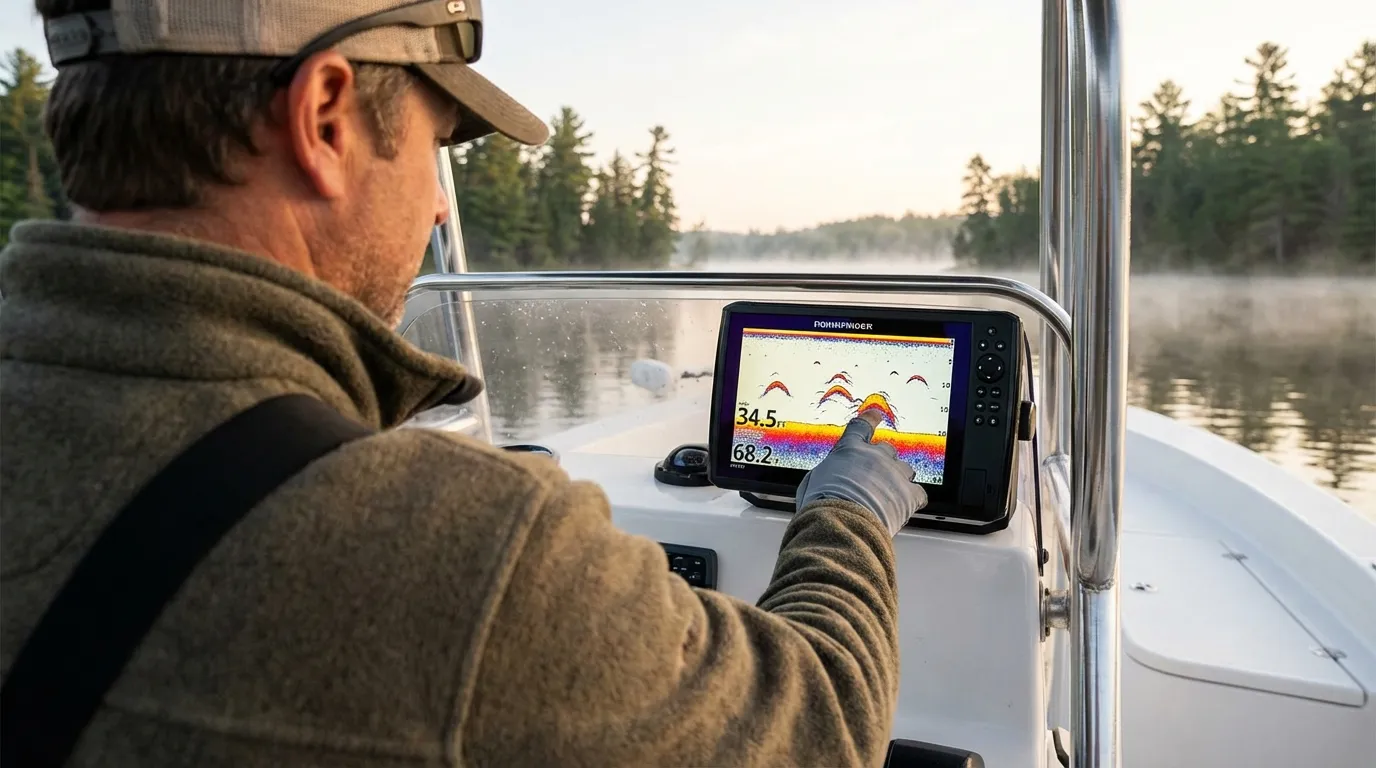
What your graph can and cannot tell you
According to Captain Jeff Blair, who reads fish finder graphs daily on Lake Lanier, your graph can tell you where life is, where depth zones are active, and whether fish and bait are interacting. It cannot guarantee fish will commit without the right presentation and boat control.
Use graph data to guide decisions, not to lock yourself into one interpretation.
Core striper graph signatures on Lanier
- Dense bait clouds with directional movement
- Fish marks under or around bait concentrations
- Depth bands where fish appear repeatedly across passes
- Sudden signal dropoff that suggests zone change is needed
Simple graph reading workflow
- Step 1: confirm active bait before rigging heavily
- Step 2: identify repeatable fish depth, not random marks
- Step 3: run one clean presentation at that depth band
- Step 4: adjust depth in small increments before major changes
- Step 5: relocate early if graph life fades
This sequence keeps you from overreacting to noise and helps preserve productive windows.
Common graph-reading mistakes
- Chasing isolated marks with no bait support
- Treating one good screenshot as an all-day pattern
- Changing rigs constantly instead of improving depth control
- Ignoring fish response quality after each adjustment
Beginner drill for faster graph confidence
Run this exercise on your next trip:
- Pick one zone and log bait position every 10-15 minutes
- Track fish depth before and after each adjustment
- Record which depth changes improve bite quality
- Review notes after the trip to build your own decision checklist
One disciplined notebook day can improve graph decisions more than weeks of random guessing.
Get on-water graph coaching
If you want this skill to click faster, we coach graph interpretation live during guided trips.
Half Day: $600 (5 hours) | Full Day: $825 (8 hours) | Max 4 guests per boat | Call/Text: (678) 542-4176
FAQ
Do fish always appear as classic arcs on Lake Lanier?
No. On Lake Lanier, stripers often appear as streaks, clusters, or partial marks depending on boat speed, fish movement, and transducer angle. Captain Jeff Blair teaches clients to look for repeatable depth signatures and bait interaction patterns rather than textbook arcs. Dense bait clouds with fish marks at consistent depths are more actionable than isolated perfect arcs.
Should I move when I see fish on the graph but do not get bites?
Not immediately. First refine bait quality and adjust depth in small increments based on where marks appear on your graph. Jeff Blair Striper Guides recommends making two or three controlled adjustments before relocating. If response stays flat after disciplined changes, move zones before prime windows are gone. Graph data should drive adjustment decisions, not just relocation.
Can beginners learn graph reading quickly on Lake Lanier?
Yes. Jeff Blair Striper Guides teaches a simple repeatable graph reading workflow during guided trips that beginners can apply immediately. The key is focusing on three signals: active bait density, fish depth relative to bait, and whether marks are static or moving. Our guides log over 300 days per year reading Lake Lanier graphs and can accelerate your learning curve significantly.