Lake Lanier Striper Fishing Seasons: A Practical Year-Round Guide
Lake Lanier is a 38,000-acre Army Corps reservoir in North Georgia that supports year-round striped bass fishing across four distinct seasonal patterns. Jeff Blair Striper Guides, a full-time 6-boat fleet operating since 2005, adjusts tactics by season — from winter creek channel downlining to spring topwater, summer deep-water programs, and fall migration patterns. Stripers are saltwater fish stocked in this freshwater lake, nomadic enough to migrate up to 8 miles a day. Staying on top of their movement requires being on the water every day, which is why many anglers hire a Lake Lanier fishing guide.
Last updated:
The framework that works year-round
People ask one version of this question all year: "When is the best time to fish stripers on Lake Lanier?"
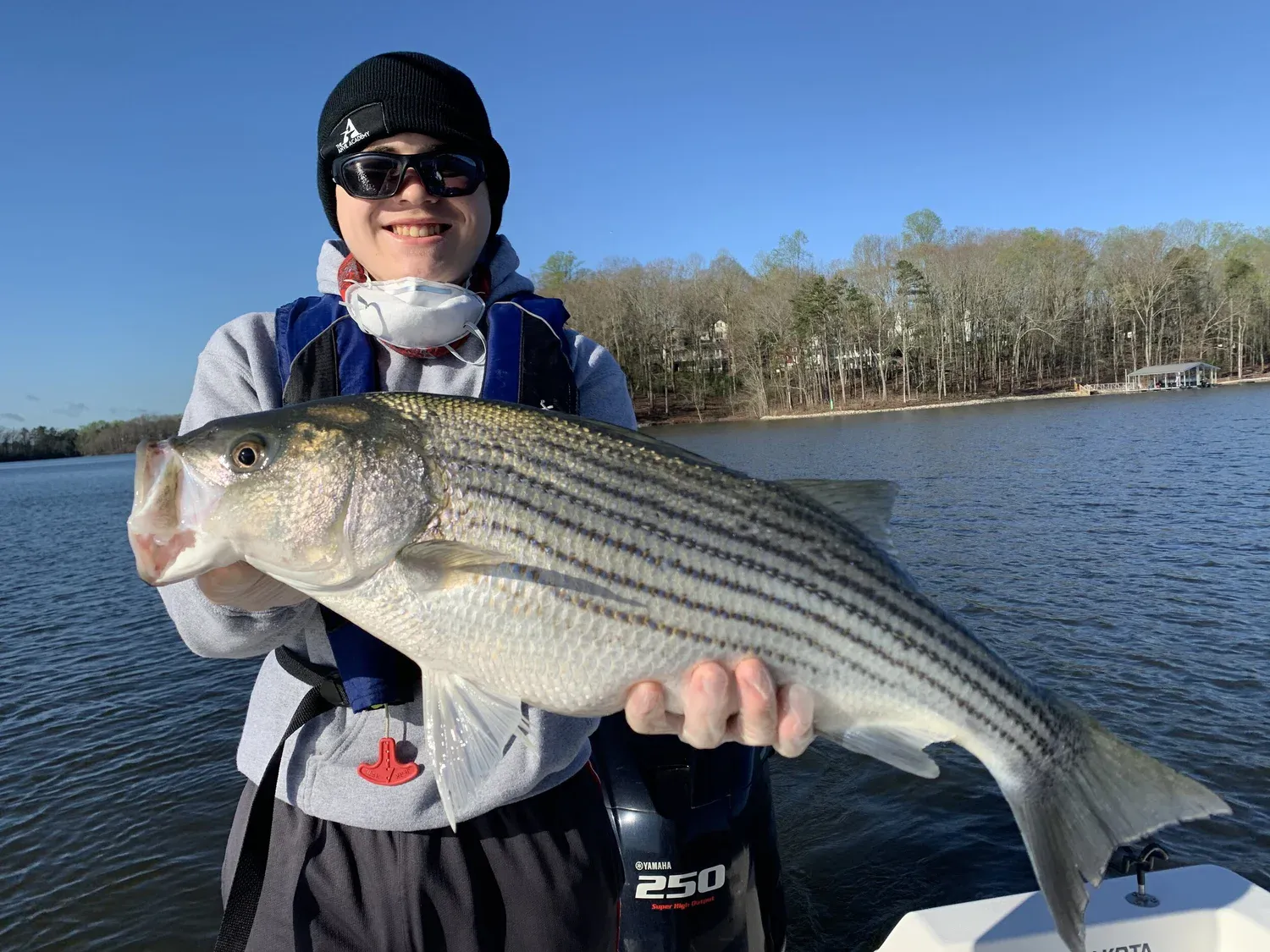
According to Captain Jeff Blair, a full-time Lake Lanier guide since 2005, there are productive opportunities in every season. What changes is the pattern. Stripers shift with bait, water temperature trends, daylight, and pressure. If you fish the season correctly, you can stay in quality action all year.
Across all seasons, the same decision order wins:
- Find active bait first.
- Identify fish position in the water column.
- Choose a presentation that matches behavior now.
- Adjust quickly when signs change.
Many slow days happen because anglers skip step one and fish memory locations without confirming active life.
Spring
As we roll into the spring and the water temp starts rising everything changes pretty drastically. The stripers start getting shallower and migrate all over the lake very fast. This is the time of year our stripers can be anywhere on our 38,000 acre lake and there will be multiple bites going on at the same time.
There will be groups in our creeks feeding on threadfin shad and groups out over the main river channel feeding on the deep blueback herring. There will also be some small groups that migrate up both the Chestatee and Chattahoochee river systems to go through the spawning motions.
No matter where you find them in the spring it is primarily a topwater/shallow bite. Spring is also a good time to target trophy size fish. The bigger stripers start feeding on bigger baits like gizzard shad that are 12–16” long.
Summer
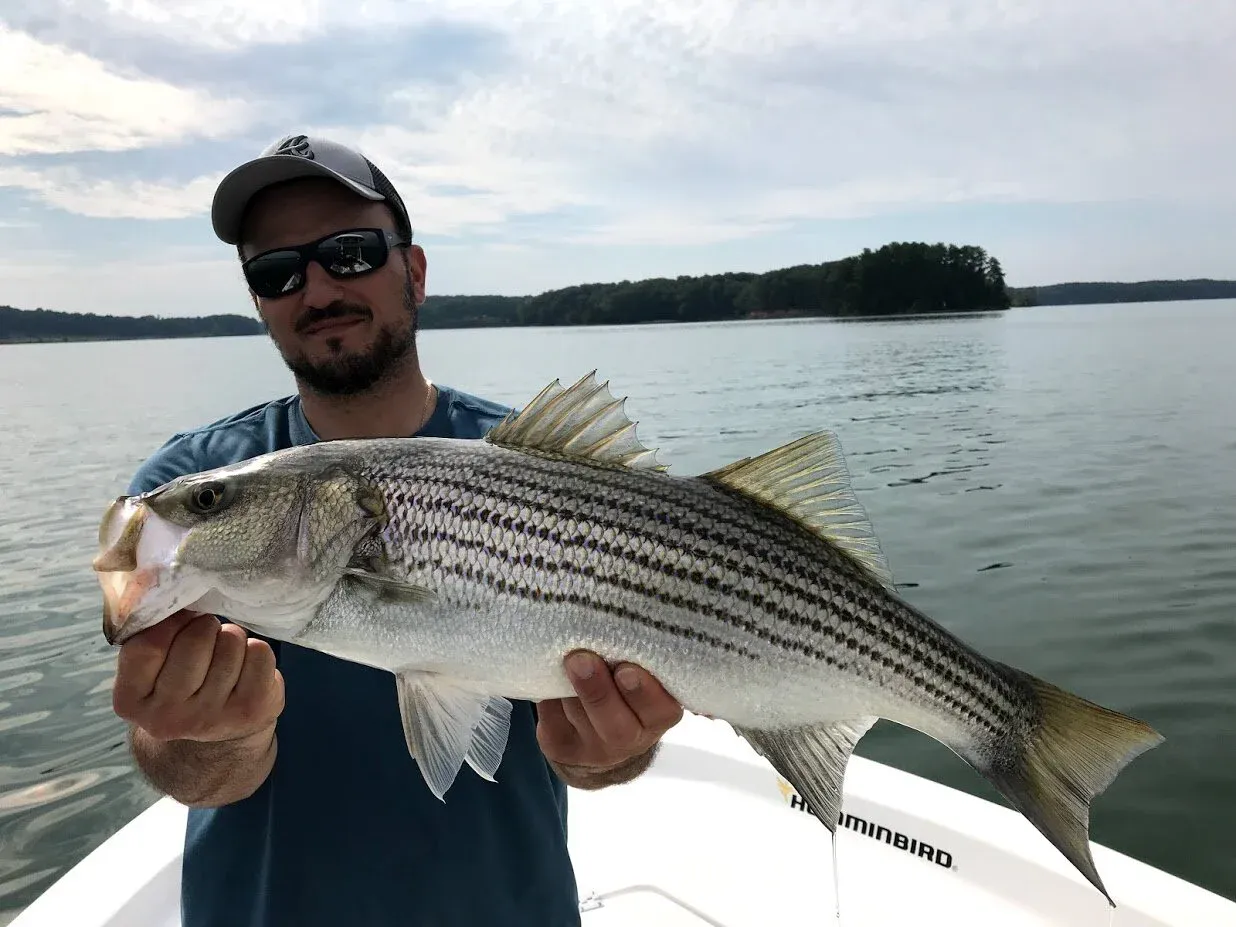
Towards the end of spring as the water temp starts getting really warm our striped bass start migrating to the south end of Lake Lanier to spend the summer in what we call their “summertime refuge”. Stripers need cold highly oxygenated water to survive and during the summer months most all of our striped bass population is in deep water on the south end of the lake.
This time of year our stripers will get into some crazy big schools and normally feed really good. Our summer bite is probably the most consistent bite and known to put big numbers in the boat.
By the end of the summer the deep water on the south end loses its dissolved oxygen and the stripers start moving around fast trying to find good oxygen levels.
Fall
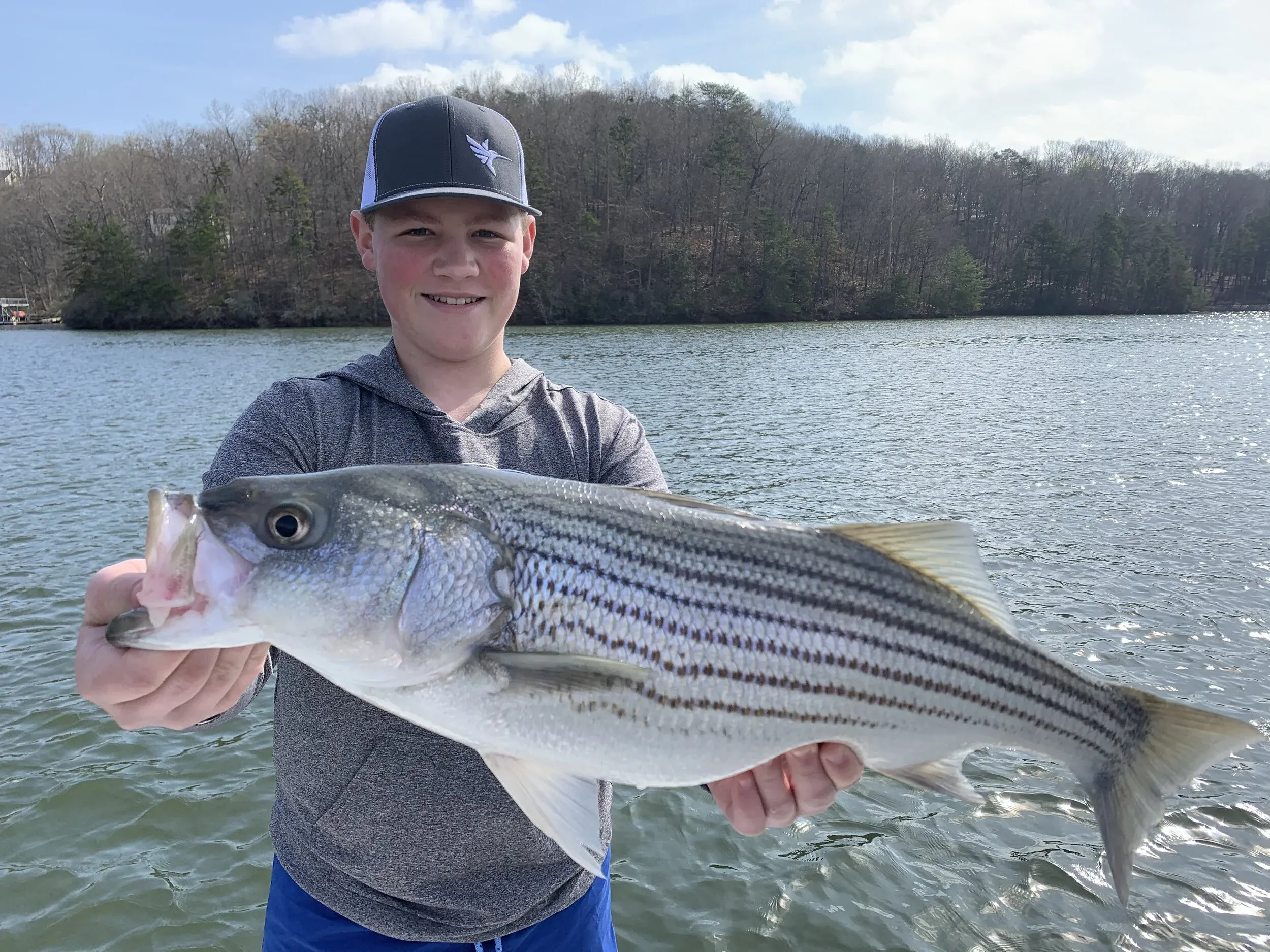
This can be a tough time of year to fish but every year it goes down a little different. Once we get the cool fall nights and the lake starts its turnover process the surface layer starts holding most of the oxygen.
Once this happens it kicks off our fall topwater bite. Huge schools of stripers blowing up all over the place. Most of these trips are topwater lure trips. Then as the weather gets cold again the bait starts getting deeper and the stripers go into the winter creek pattern.
Winter
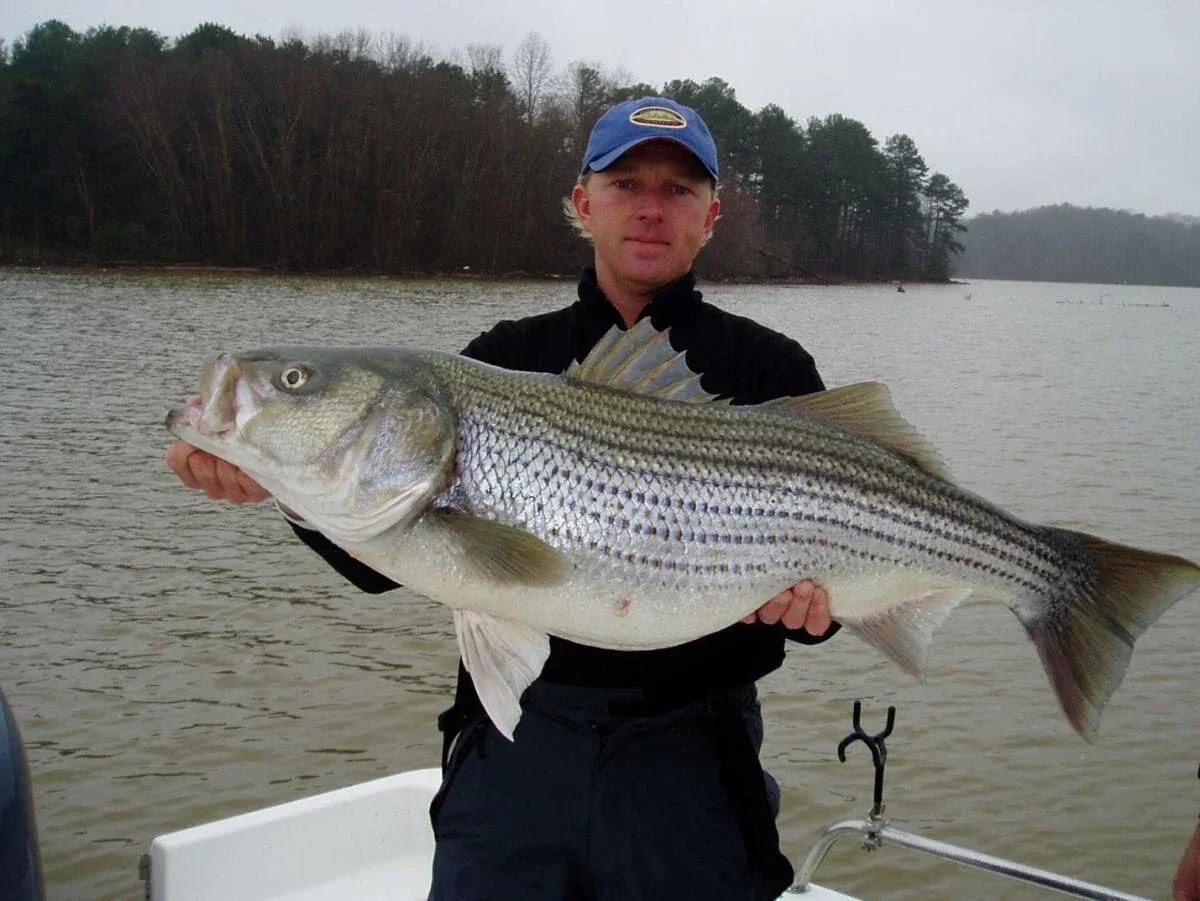
Most winters our stripers are holding in creek channels—north end and south end—feeding on what I call a “river of bait”. There are creeks that have small bait pods in them and some have a section of solid deep bait that will last hundreds of yards long that can be easily found on your Humminbird electronics. That is the “river of bait”.
The bigger schools of stripers will be around that mass of bait. Every now and then the stripers will push that bait to the surface or in the very back of the creek and you can catch them on topwater but most of the winter we catch them down lining live bait.
Month-by-month striper fishing guide
These are the typical Lake Lanier striper patterns to plan around. They are seasonal expectations, not guarantees — water temperature and the active bite shift year to year, so check the live fishing report for current conditions before your trip.
| Month | Typical surface temp | Where stripers hold | Primary technique |
|---|---|---|---|
| January | 45–50°F | Creek channels, north and south ends | Downline live herring, 25–45 ft |
| February | 44–50°F | Deep creek "river of bait" | Downline live herring, 25–45 ft |
| March | 52–58°F | Migrating shallow; creeks and river arms | Topwater and planer boards, 5–25 ft |
| April | 58–65°F | Flats, creek mouths, river systems | Topwater and live bait, shallow–20 ft |
| May | 64–72°F | Lake-wide; shifting toward the south end | Topwater early; downlines as it warms |
| June | 72–80°F | South-end deep "summer refuge" | Downlines, 40–70 ft |
| July | 80–86°F | South end, cold oxygenated water | Downlines, precise depth 40–70 ft |
| August | 82–86°F | South end, chasing oxygen | Mobile downlines, 40–70 ft |
| September | 72–80°F and falling | Roaming as turnover begins | Downlines plus topwater windows, 30–60 ft |
| October | 62–72°F | Surface blitzes during turnover | Topwater and coverage, surface–30 ft |
| November | 55–64°F | Transitioning into the creek pattern | Topwater early; downlines later |
| December | 48–55°F | Creek channels | Downline live herring, 25–45 ft |
Quick technique matrix by season
Use this as a practical starting point, then let current fish behavior make final decisions.
- Winter: prioritize depth control and bait quality; downlines and disciplined adjustments are often key.
- Spring: prioritize mobility and transition awareness; mix coverage and precision methods.
- Summer: prioritize efficiency and strike-zone control; keep presentation clean and fast.
- Fall: prioritize coverage and reaction speed; capitalize on roaming and feeding windows.
Season pages
Click a season below for a deeper breakdown on techniques, patterns, and what to expect.
Seasonal planning for travel anglers
If you are coming from outside the immediate Lake Lanier area, build flexibility into your schedule. Even a half-day shift in weather profile can change where and how fish set up. Direct pre-trip communication gives you better expectations and better trip outcomes.
Seasonal confidence checklist
Before your trip, confirm:
- Likely fish behavior for your date window
- Primary and backup presentation plan
- Half day vs full day fit for your goals
- Group setup and coaching needs
- Weather-driven adjustments for launch timing
Prepared anglers make better in-trip decisions and waste fewer high-value windows.
Book for the current pattern
Call or text (678) 542-4176 and ask what pattern is strongest for your target dates.
FAQ
What’s the best season for stripers on Lake Lanier?
Lake Lanier produces quality striped bass in all four seasons. Spring and fall topwater bites draw the most attention, but winter creek channel patterns and summer deep-water programs can be equally productive. Lead guide Jeff Blair, who logs over 300 days annually on Lake Lanier, recommends choosing dates around current pattern strength rather than calendar assumptions.
Do techniques change by season?
Yes. Downlines dominate in winter when stripers hold in creek channels at specific depths. Spring brings topwater and planer board opportunities as fish roam shallow. Summer shifts to deep-water efficiency programs on the south end. Fall combines topwater blitzes with coverage tactics. Jeff Blair Striper Guides adjusts the plan daily based on real-time fish behavior.
Should you book half day or full day by season?
It depends on the seasonal pattern. In winter and summer, full day trips ($825) give more time to work through depth changes and shifting bite windows. Spring and fall half days ($600) can be very productive when surface activity is strong. Call Jeff Blair Striper Guides at (678) 542-4176 to discuss which length fits your target dates.